Followers

Monday, 22 July 2013

July "delights"...


My mother had an ornamental  and a vegetable garden.
 I think back with sadness  and gladness in my heart,  as I still see her  asters in shades of purple and pink. A rose bush with small white roses with prominent golden centres full of music from the insects burying  into  the sweetness…Ts


Flowers in the kitchen;


Grevillia Caloundra Germ


Planting a garden is a joy that never fades into nothing. Ts


I love this strong orange Crucifix Orchid; (Epidendrum ibaguense) it flowers practically non stop,
 a delightful addition for any garden. 

This species occurs naturally from Mexico to Colombia. It has long, thin stems and leathery leaves. The flowers bloom in clusters, with up to 20 flowers open on a stem at once. They come in orange, red, mauve, purple, salmon and yellow.
The common name 'crucifix orchid' refers to the lip of the flower (called the labellum), which resembles a small, gold cross. Crucifix orchids are tough, easy to grow, easily propagated and they have vivid, long lasting flowers. In fact, they are an excellent beginner's orchid. They can be grown in containers in a free-draining mix, amongst rocks in the garden, or in soil. They like a frost-free climate and flower best in a full sun position.


Abutilon;


I have never been overly attracted to formal gardens. I like lots of variety and I prefer untamed natural gardens with just a little tweak of guidance. I don’t like  at all the uniformed suburban gardens. Seldom one sees a gardener’s hand in one. 
Such a delight when the odd one stands out. Ts


A whimsical addition...


I have never thought about why I  enjoy so much planting a garden. I guess it is like music in colours and patterns. So much to admire, from the bark of a tree to  lichens,   warm, lingering fragrances and earthy homely scents,  colours,  the mysterious whispers of the leaves, butterflies, the odd unusual insect looking at you with tiny round eyes…
 the garden is very patient it always waits.. Ts


Azalea/Rhododendron X  Dreamtime grows since more then 20 years in my garden. I have made many cuttings  to give away or for myself.


This Calistemon grows very tall if you let it. The brushes are delightful, squat, red with lots of gold overlaid.

A garden should not be  seen in full at the first glance; if possible it should have many pathways turning here and there, little nooks with surprises, climbing plants over arches, pot plants placed to catch the eye. The trees adorned with orchids or climbing plants, so many possibilities and ideas  to give the garden your own impression. Ts


Camellias for winter pleasure.


Tillansia seed has settled freely on this branch and produced  all these seedlings;
 I am always amazed again by nature's  free bounty.


A fine Camellia, Ecclefield japonica;


This one has blue blood...D.Herzilia de Freitas Magalhaes; my guess, 
with a name like this one must feel very special! Ts


Egao, Camellia sasanqua (vernalis) has grown with my garden. It is one of the best, long flowering, no fuss, no demands, beautiful silvery pink semi double flowers. If I had to choose one it would be this one. Ts


Camellia japonica, double, Blood of China, compact bushy shrub up to 1.5 m


Believe it or not:
"I cannot persuade myself that a beneficent and omnipotent God would have designedly created parasitic wasps with the express intention of their feeding within the living bodies of Caterpillars." - Charles Darwin


©Photos from my garden/Text Ts

Friday, 28 June 2013

June; Half year round up;


My garden from January to June;

Go to Heaven for the climate, Hell for the company.


January


The bigger the hat, the smaller the property – Australian proverb


February


A Platypus is a duck designed by a committee 


March


Those who lose dreaming are lost – Australian Aboriginal proverb


April


A queer country, so old that as you walk on and on, there’s a feeling comes over you that you are gone back to Genesis –
Australian bushman


May


Such is life   Ned Kelly – bushranger


June


The Australian nation is a nation of blow-ins and we’ve got the lot here – bog Irish, reffos, dagos, wogs, slopes, you name it
Bill Leak – cartoonist


We cultivated our land, but in a way different from the white man. We endeavoured to live with the land; they seemed to live off it
Tom Dystra – Aboriginal man


Out in the bush, the tarred road always ends just after the house of the local mayor – Australian observation


Believe it or not:

  • "Damn the teamsters, damn the track,
    Damn Coolgardie, there and back,
    Damn the goldfields, damn the weather,
    Damn the bloody country altogether."

     a Western Australian prospector's toast


In June  Melaleuca quinquenervia  is flowering, a tantalizing treat for birds and insects.


©Photos from my garden Ts

Saturday, 1 June 2013

Juhu or Yay...it's June;

Winter has arrived in the garden;


Home is the best  place to be when the sun beckons to come out into the garden  to get the hands into the soil and put some seed in, which in time will become lettuce or flowers or even a whole tree. Titania


The splendidly blue Salvia  "Black Knight" is still flowering. It can be propagated from cuttings in spring and summer.


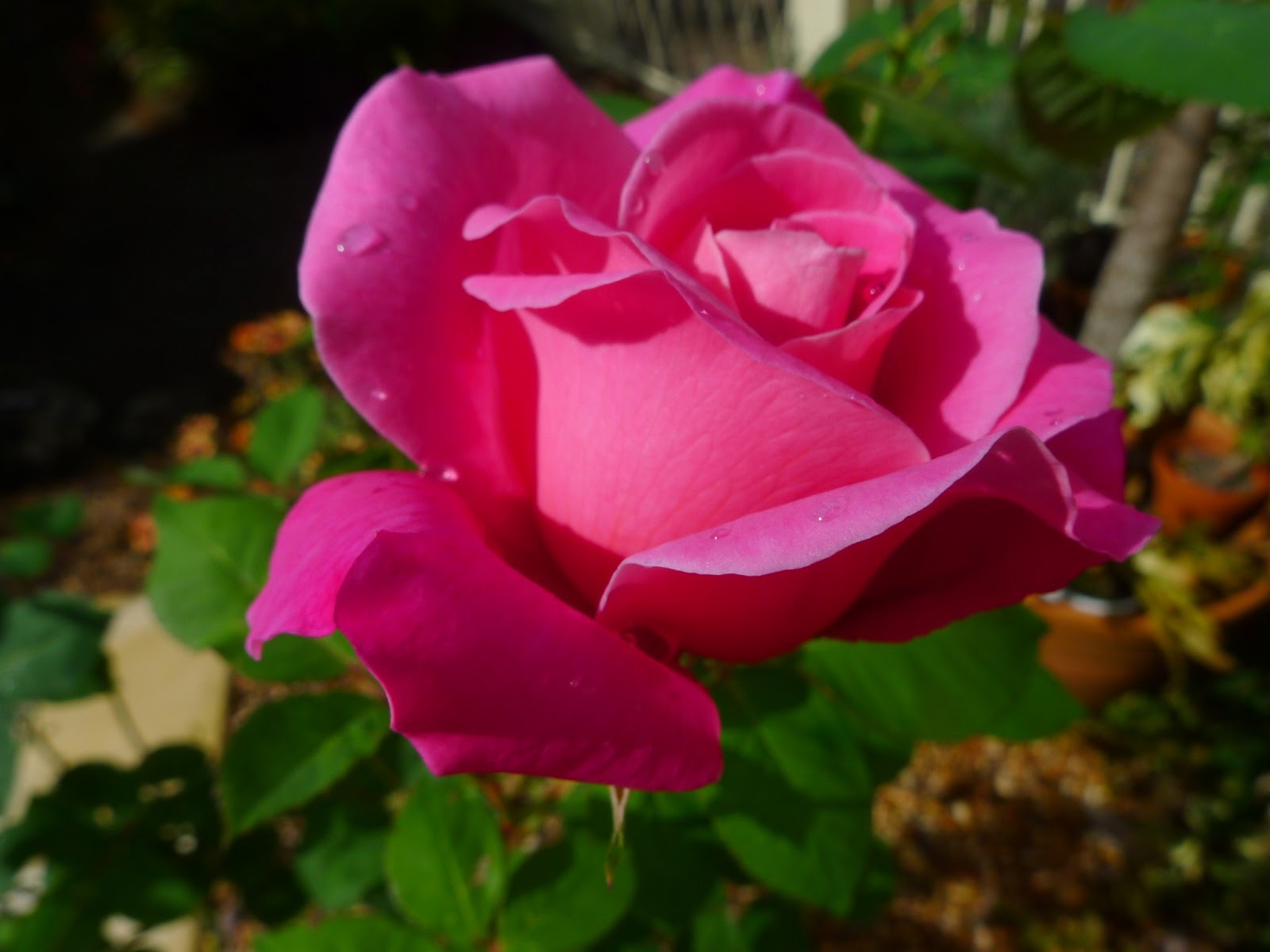
Roses take a new lease of life in winter. Perfumed Delight, has everything I expect from a rose. a wonderful warm  rose scent, strong pink, no fading colour. Beautiful shape of blooms and great to cut for inside. Now is the time to make cuttings, as cuttings from this rose grow well.
In the subtropics "Perfumed Delight is a sure winner in the cottage garden.


I named all my children after flowers. There's Lillie and Rose and my son, Artificial.
 Bert Williams 


“The first supermarket supposedly appeared on the American landscape in 1946. That is not very long ago. Until then, where was all the food? Dear folks, the food was in homes, gardens, local fields, and forests. It was near kitchens, near tables, near bedsides. It was in the pantry, the cellar, the backyard.” 
Joel Salatin, Folks, This Ain't Normal: A Farmer's Advice for Happier Hens, Healthier People, and a Better World


My garden provides fruit, like Bananas, Brazilian custard apple, Passion fruit, Mandarins and Pawpaws. This assortment of fruit makes fabulous desserts.


Yellow Brugmansia, delightful all year round. Now in the morning dew drops hang onto the petals and the cool makes them nearly pink, the flowers are huge,  frivolous, swaying like frilly petticoats.


Growing plants challenges and pleases the human spirit. Plants are a big part of our evolution. Many have forgotten this pleasing part of life. It is regarded as toil instead as an essential part of living. Titania


After a good pruning bougainvillea Pedro is back into flowering mood.


“The greatest service which can be rendered any country is to add a useful plant to its culture.

The Fruit Hunters


Delicate blush pink Camellia japonica CanCan likes to flower in the shade.


Bromeliad with hanging flowers can grow up to 1 meter long.


“A garden should make you feel you've entered privileged space -- a place not just set apart but reverberant -- and it seems to me that, to achieve this, the gardener must put some kind of twist on the existing landscape, turn its prose into something nearer poetry.” 
Second Nature: A Gardener's Education


My delightful fungi garden.


Camellias are tough as old boots;  Drama girl lives up to its reputation.


Kipfler Potatoes from the garden.


My trusty hens recycling all the scraps.  They have got a nice yard, with trees to sit in the shade,  to run or scratch for a few special treats.


Believe it or not:

Look back over the past, with its changing empires that rose and fell, and you can foresee the future, too.

 Marcus Aurelius 


©Photos from my garden/text Ts

Tuesday, 14 May 2013

MAY has entered through the back door;

Nature’s force we do not fully understand, 
 we are overwhelmed by its relentless reasons of cruelty,
 or we are awestruck by its actions of beauty and serenity. Titania


Sunrise in the Valley;


Autumn;


Allamanda cathartica is also notable for its medicinal properties: all parts of the plant contain allamandin, a toxic iridoid lactone.  Iridoids are a class of secondary metabolites found in a wide variety of plants that function as defensive compounds. 

 The leaves, roots and flowers may be used in the preparation of a powerful cathartic; the milky sap is also known to possess powerful antibacterial  properties. 

The genus name Allamanda derives from Dr. Frédéric-Louis Allamand (1735–1803), a Swiss botanist of the late 18th century.


Cat's Whiskers; Orthosiphon aristatus
Plant Type: sub-shrub
Plant Height: 1.2m
Plant Spread: 1m
Sunlight: hot overhead sun to warm low sun
Soil Moisture: dry between watering to constantly moist
Plant Uses: informal hedge, mass planting, border
Plant; Prune after flowering.


Herbgarden;

“So long as men can breathe, or eyes can see,
So long lives this, and this gives life to thee.” 
 William Shakespeare, 


Iceberg roses flower all year round in my garden.

By that sweet ornament which truth doth give.
The rose looks fair, but fairer we it deem 
For that sweet odour which doth in it live. 
W. Shakespeare


Billy, my friend and companion, in the garden he chases away the snakes!


Angel wing Begonia, slivers of sunlight make its leaves glow.


Camelia sasanqua  Plantation Pink, with its papery petals is an asset to any garden.

Camelia sasanqua has the  distinctive advantage of tolerating both full sun and partial shade. Camelia sasanqua are the most robust and versatile of all the camellia species - a finer choice for a hedge, topiary or espalier could not be made. The first of the camellia species to flower in abundance in autumn.


Camelia sasanqua. Wahroonga;


“Shall I compare thee to a summer's day?” 
 William Shakespeare,


Tree Dahlia, highlighting  the garden in autumn through winter.

The tree dahlia or Dahlia imperialis is a dramatic, fast growing perennial from South America. It grows three to five metres high with tall, sturdy bamboo-like canes topped with large lavender flowers in autumn and winter. The best time to cut them back is in winter after they have finished flowering.

* Remove all the dead wood.

* Cut down the canes that flowered last autumn; these are the ones to use for propagation.

* You can see a big bulbous bit at the bottom. That is the bulb of the dahlia that will shoot in spring and be three to five metres high again by autumn. 

* Cut canes into 50 centimetre lengths. Ensure you have at least two nodes per cane, because they’ll actually root and shoot from those nodes.

* Choose a site that’s sunny, protected from the frost and wind and dig a trench 10 centimetres deep. 

* Lay a cane horizontally along the trench. They shoot from the nodes and in no time at all, you’ll get a lovely clump.

* You could put three canes in the ground to get a nice thicket of plants.

* When new growth gets to a metre high, nip the tips out. The canes won’t get as tall but will be sturdier and more resistant to wind damage.


Sunset in the Valley;  

Believe it or not:
A man's friendships are one of the best measures of his worth.
Charles Darwin


©Photos/Text Ts